Abbot of San Zeno
The Abbot of San Zeno is a minor but sharply drawn figure whom Dante and Virgil encounter on the Fourth Terrace of Mount Purgatory, where the sin of sloth—love of good deficient in zeal—is purged. Though he appears only briefly, his words carry a pointed historical and moral charge, linking the penitential discipline of Purgatory to the corruption of ecclesiastical office in the world above.
Identity and Historical Context
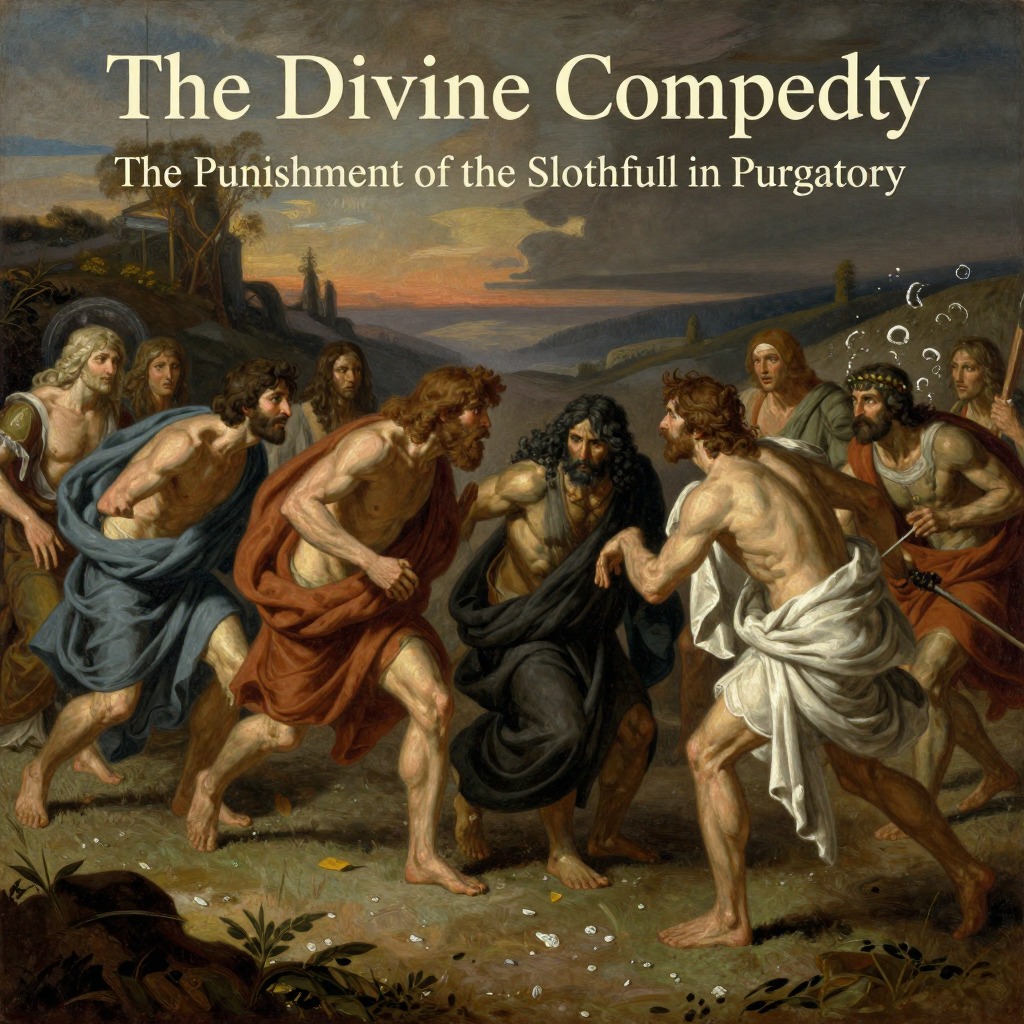
The Abbot identifies himself as having been the head of the monastery of San Zeno in Verona, serving under the reign of the Emperor Frederick Barbarossa, whom he calls "good Barbarossa" and notes that "still sorrowing Milan holds discourse" of him. This places his abbacy in the mid-to-late twelfth century, a period of conflict between the Empire and the Lombard communes. His own name is never given in the poem; he is known solely by his office. He speaks as one of the running penitents on the terrace of the slothful, a group that moves with eager haste to make up for the negligence of their earthly lives.
Encounter and Prophecy
When Dante and Virgil ask for the nearest passage upward, the Abbot, already moving swiftly, calls back over his shoulder: "Come on / Behind us, and the opening shalt thou find; / So full of longing are we to move onward, / That stay we cannot; therefore pardon us, / If thou for churlishness our justice take." He then delivers a prophecy concerning his own monastery. He declares that a man "who has one foot in the grave already" will soon lament having had power there, because he will install his own son—"in his whole body sick, / And worse in mind, and who was evil-born"—as the true pastor's successor. This is a direct condemnation of nepotism and the abuse of ecclesiastical authority, a theme that runs throughout the Commedia.
Thematic Significance
The Abbot of San Zeno serves as a living example of the purgatorial process: he who was once slothful in his duties now runs with eager zeal, unable even to pause for conversation. His prophecy, delivered in haste, underscores the moral that earthly corruption—especially the perversion of spiritual offices for family gain—will be met with divine justice. The figure thus embodies the poem's persistent critique of a Church that has strayed from its spiritual mission, while also demonstrating the transformative power of repentance and the urgency that characterizes the purgation of sloth.